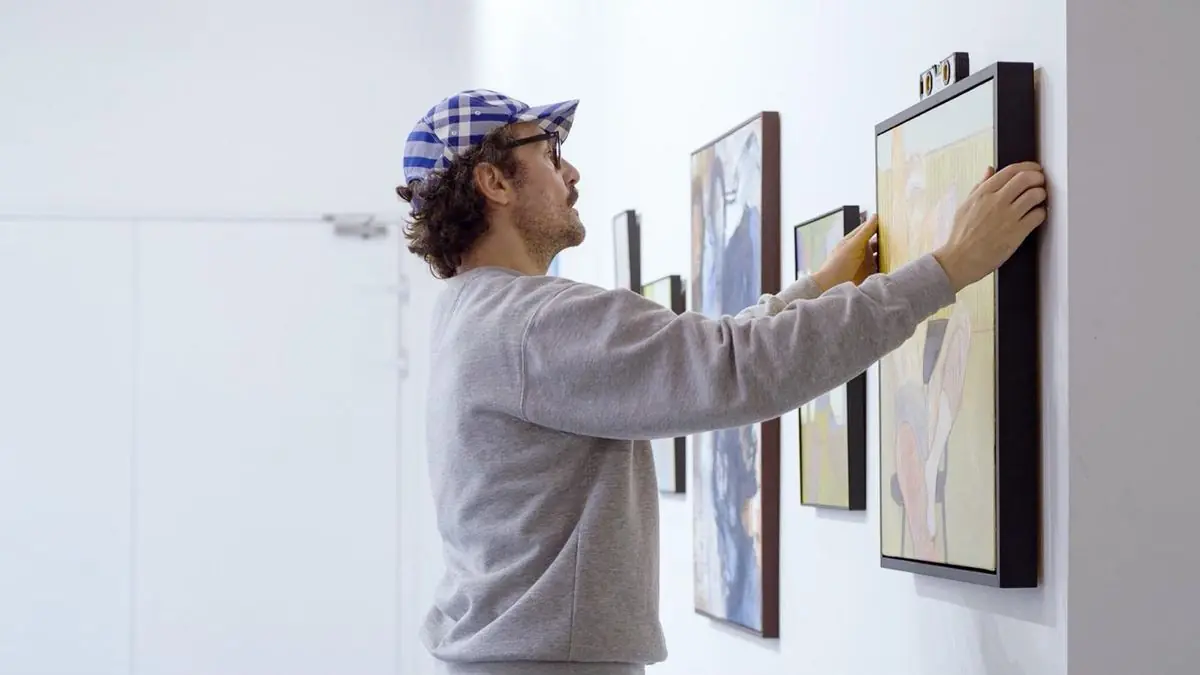
Trevor Read is the founder and curator of Adorn The Common, the East London gallery and platform he started in 2018 to give overlooked and underrepresented artists the visibility they deserve. Black creatives, queer artists, female artists, independent makers: Adorn is where their work gets to be seen, bought, and talked about, in a space built around them rather than around the market.
What I love about Trevor's story is that it isn't a straight line. He trained in art and graphic design, then took a sixteen-year detour through hairdressing, beauty, and PR, an eye for detail, style, and people that he carried straight back into the art world when he returned to it. Adorn began as a small website selling his own painting and printmaking, and grew into something with a pulse: a studio on Cambridge Heath Road where artists and collectors actually meet, and where the work tends to start a conversation, make a statement, and occasionally steal the show.
More recently, our relationship has grown to include neurocoaching through expansion works®. In this conversation, Trevor shares how Adorn came to be, why community sits at the centre of everything he builds, and what's shifted for him.
Could you introduce yourself and Adorn The Common, who you are, and what you set out to build back in 2018?
My name is Trevor Read, and I'm the founder and curator of Adorn The Common.
Back in 2018, I'd taken some time out after a 16 year career working in hair and beauty because I wanted to explore a different direction. Before moving to London, I had studied art, but somewhere along the way I had lost sight of that part of myself and how much creating meant to me.
During that break, I picked up my brushes again. I started painting, experimenting with embroidery and printmaking, and I suddenly realised that creativity was the thing that had been missing from my life. It wasn't even necessarily about creating something finished, it was the process itself. Creating made me feel energised, nourished and connected.
At the same time, I was having conversations with artists around me, and the common theme was that many were struggling to find representation. They were being rejected from open calls and exhibitions, and many of the artists I was speaking to happened to be Black and queer creatives.
At the time, I didn't set out with a grand mission to address that imbalance. I simply recognised that these were incredibly talented artists whose work deserved to be seen.
I already had a small online platform where I shared my own work. I never really created with the intention of selling, but people started asking to buy my work, so I created a simple website. That website eventually became home to seven or eight other artists.
That led to my first gallery space on Charlotte Street in Fitzrovia. Within a year, we had grown significantly, representing more than 20 additional artists and opening another space in Covent Garden.
What began as a personal creative project became a fully fledged business, a platform where artists can express themselves authentically and where collectors can discover artists and work that genuinely resonates with them.
Why was representation something you built the whole platform around?
Adorn has championed a very diverse family of creatives from the beginning. I didn't fully realise at first that this would become one of the defining strengths of the business. It wasn't a strategy or something I consciously created as a business model. It was simply the most natural choice for me as a creative, a curator and a collector.
I'm always drawn to artists who have something important to say. The work that stays with me is the work that makes you question something or hits you emotionally and instinctively. The artists we were meeting all had powerful stories to tell. Whether they were exploring race, sexuality, gender, feminism, politics or identity, their work carried meaning. If something can capture your attention, make you feel something or challenge the way you see the world, then for me, it's worth supporting.
Ultimately, Adorn reflects my own values. Some decisions are driven by instinct and intuition, but they're also grounded in recognising skill, originality and artistic accomplishment.
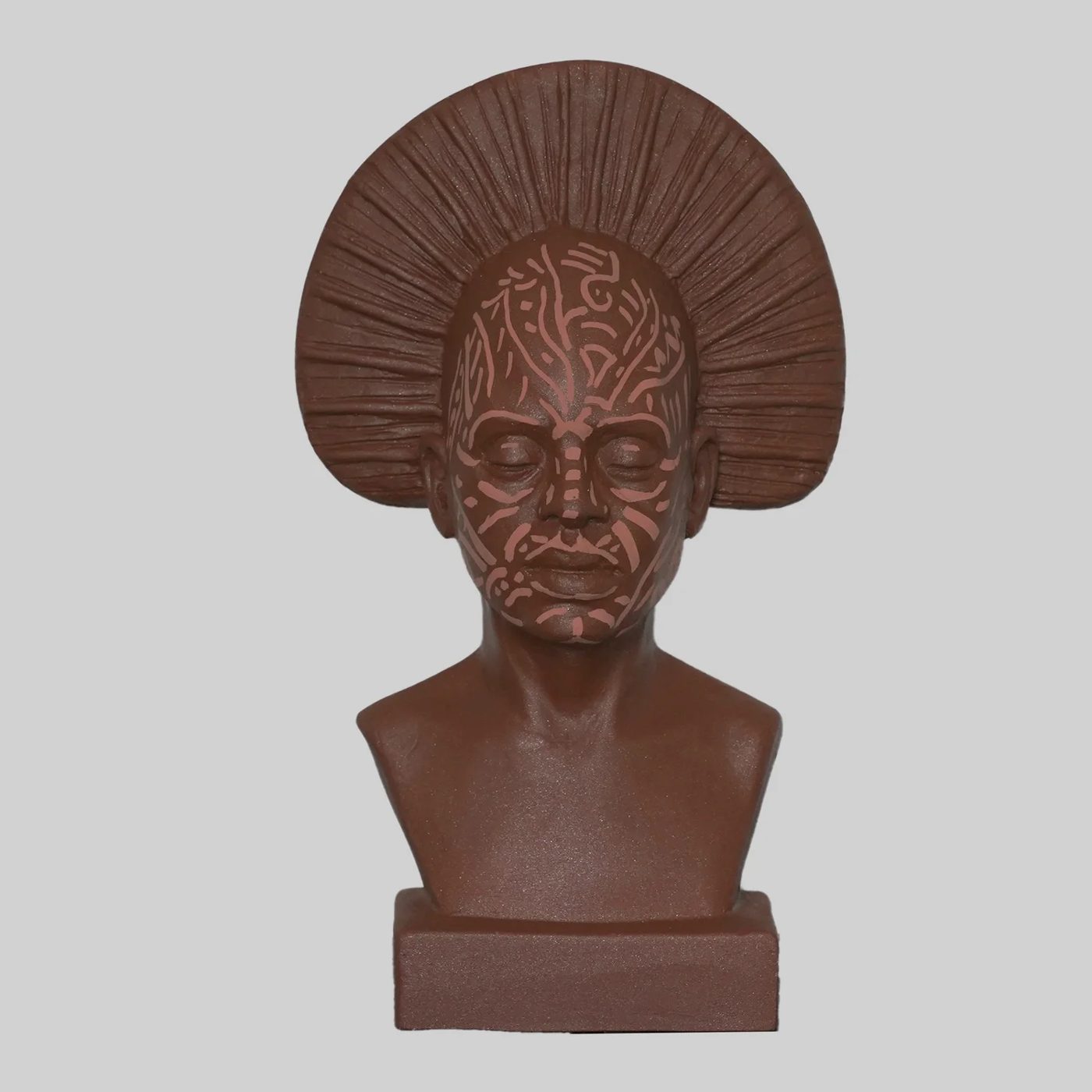
Sculpture II, resin finished with acrylic, by Stanley Onah and Subodh Gour, from the series From Ancient Braids to Contemporary Fades. See the work at Adorn The Common →
What does community mean to you, and what changes for an artist when they feel part of one?
Community really is the heart of Adorn.
I never wanted to run this business by myself or for myself. From the very beginning, it has been about creating something bigger than one person.
Everything we've achieved has been a team effort, from the artists creating the work, to the creative teams I've collaborated with, to everyone who contributes ideas and helps bring projects to life. I want everyone involved to feel like they have a voice. When we present a collection, exhibition or curated space, I want people to feel proud because they have contributed something meaningful.
Many of the artists I work with today have been part of Adorn since the very beginning. That's nearly nine years of growing together. I feel incredibly proud to be trusted with their stories and their work, but also to witness how they develop and evolve as artists and creatives. Community gives people a sense of belonging. It creates a space where artists feel seen, supported and encouraged to take risks.
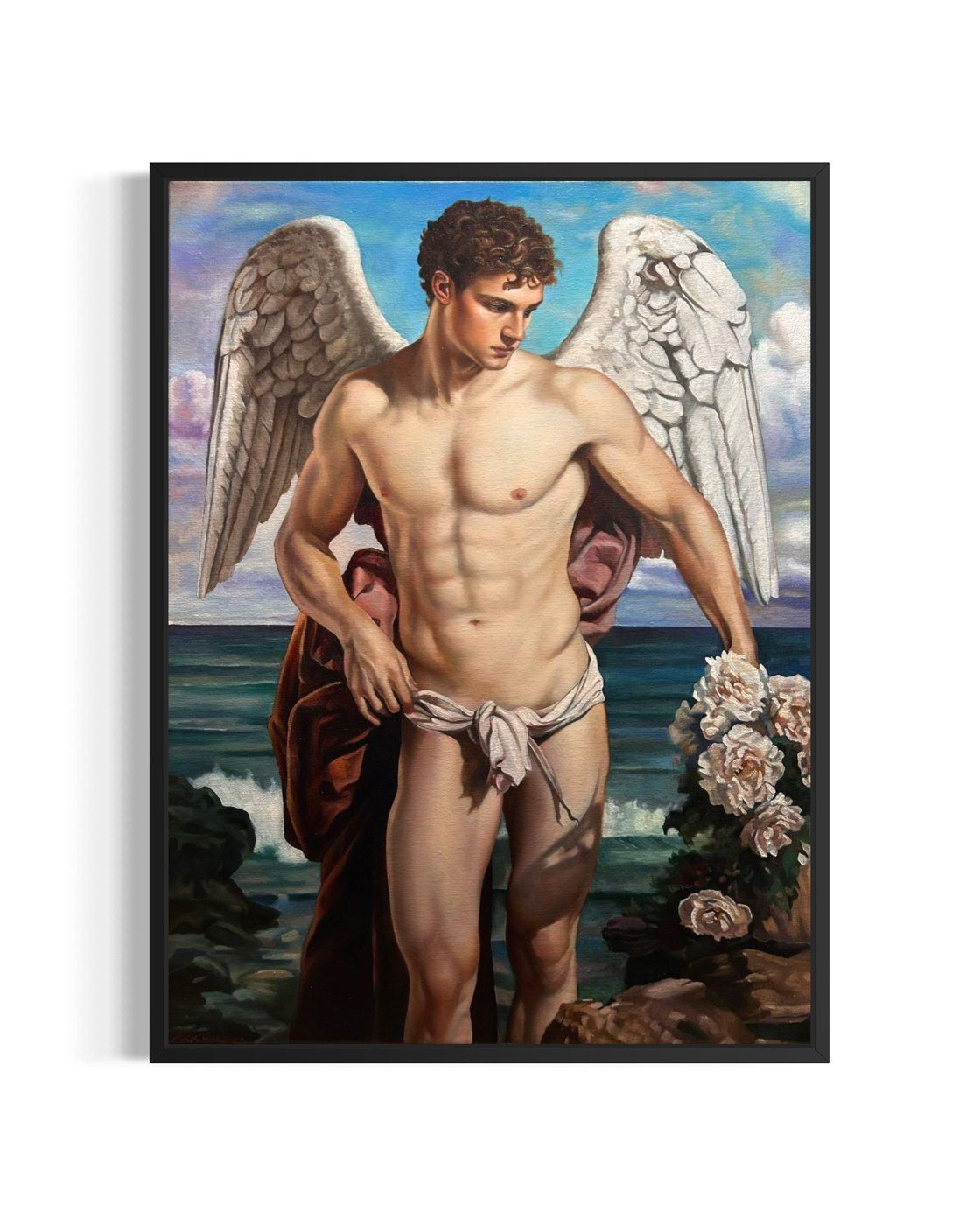
Icarus (Variation), original oil on canvas, by Alexander Weaver. See the work at Adorn The Common →
Why does maintaining a physical space matter in an increasingly online art world?
The studio on Cambridge Heath Road is really a working studio rather than a traditional gallery space. It's where we hold artwork, meet people and run the day to day side of the business.
The reality is that gallery spaces have become increasingly expensive. When I had permanent galleries, it was wonderful because we could constantly curate exhibitions and tell new stories. We could introduce people to artists every day, every week and every month. The landscape is different now. We tend to do fewer exhibitions, but when we do, we want them to have real impact, to create something memorable that lasts until the next one.
We also do more curatorial work, often being invited into corporate spaces to help source and curate artwork. It's particularly exciting when organisations genuinely want to support queer artists, Black artists, neurodiverse and female artists and underrepresented creatives, because that's where Adorn's values naturally align.
Although much of what we do happens online now, there is still nothing like people being together in a room with artwork, meeting artists, having conversations and sharing those experiences.
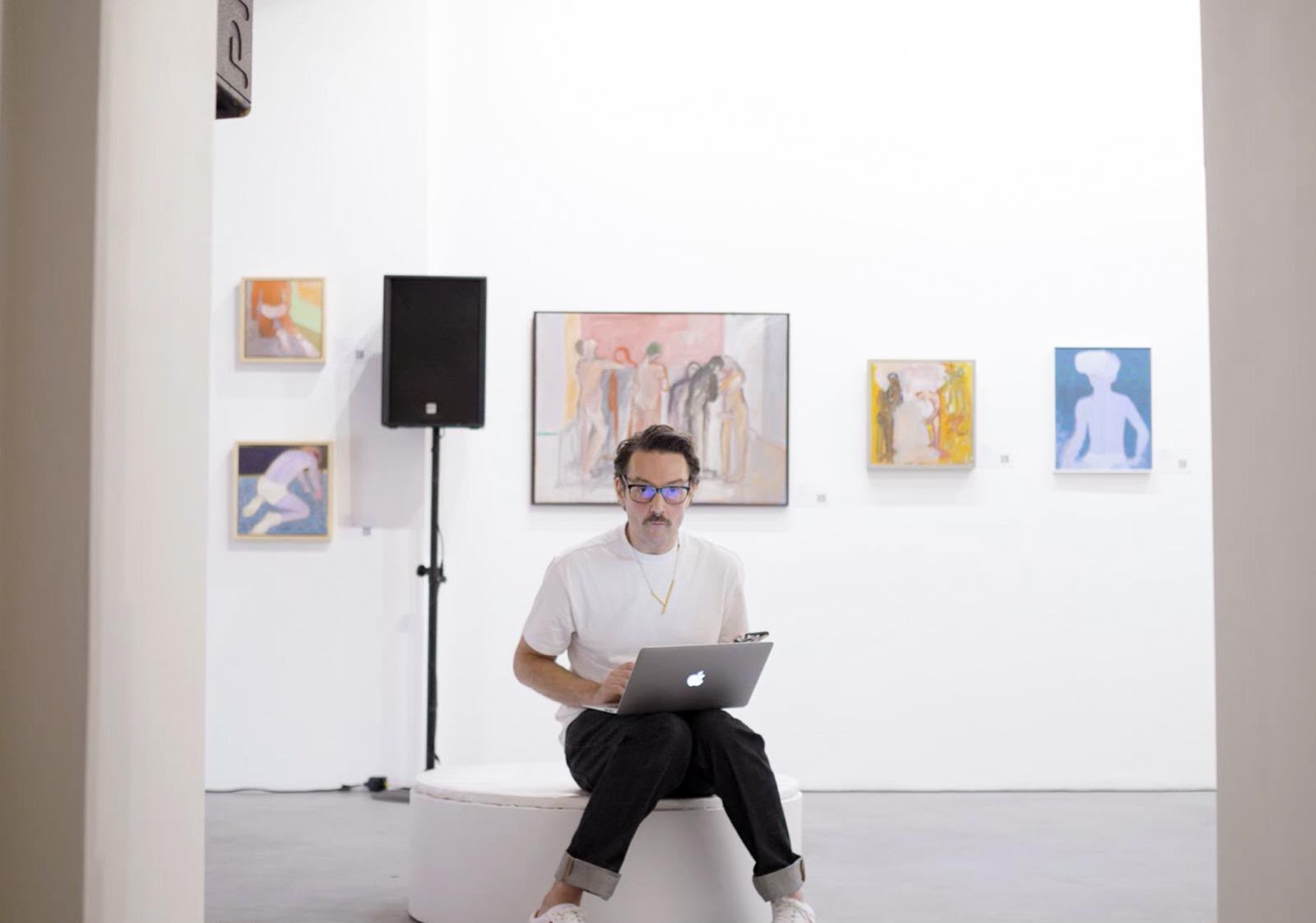
The studio on Cambridge Heath Road
How do you decide what belongs in an Adorn show?
My taste is actually very varied.
As a curator, I first have to consider whether something tells the right story. Does it fit the theme? Does it work within the space? Does it communicate something alongside the other pieces?
Personally, I'm attracted to many different forms of creativity. In my own home, I have sculpture, photography, painting, illustration and prints. My collection covers everything from pop art and surrealism to abstract expressionism, Afrofuturism, weaving and embroidery.
I think I'm particularly drawn to accomplished simplicity. It can be incredibly difficult to make something simple look effortless, and there is often huge skill behind that. But equally, I love bold, layered and visually powerful work.
The common thread is always skill, talent and intention. I want to feel that an artist has something to say and has found the right way to communicate it.
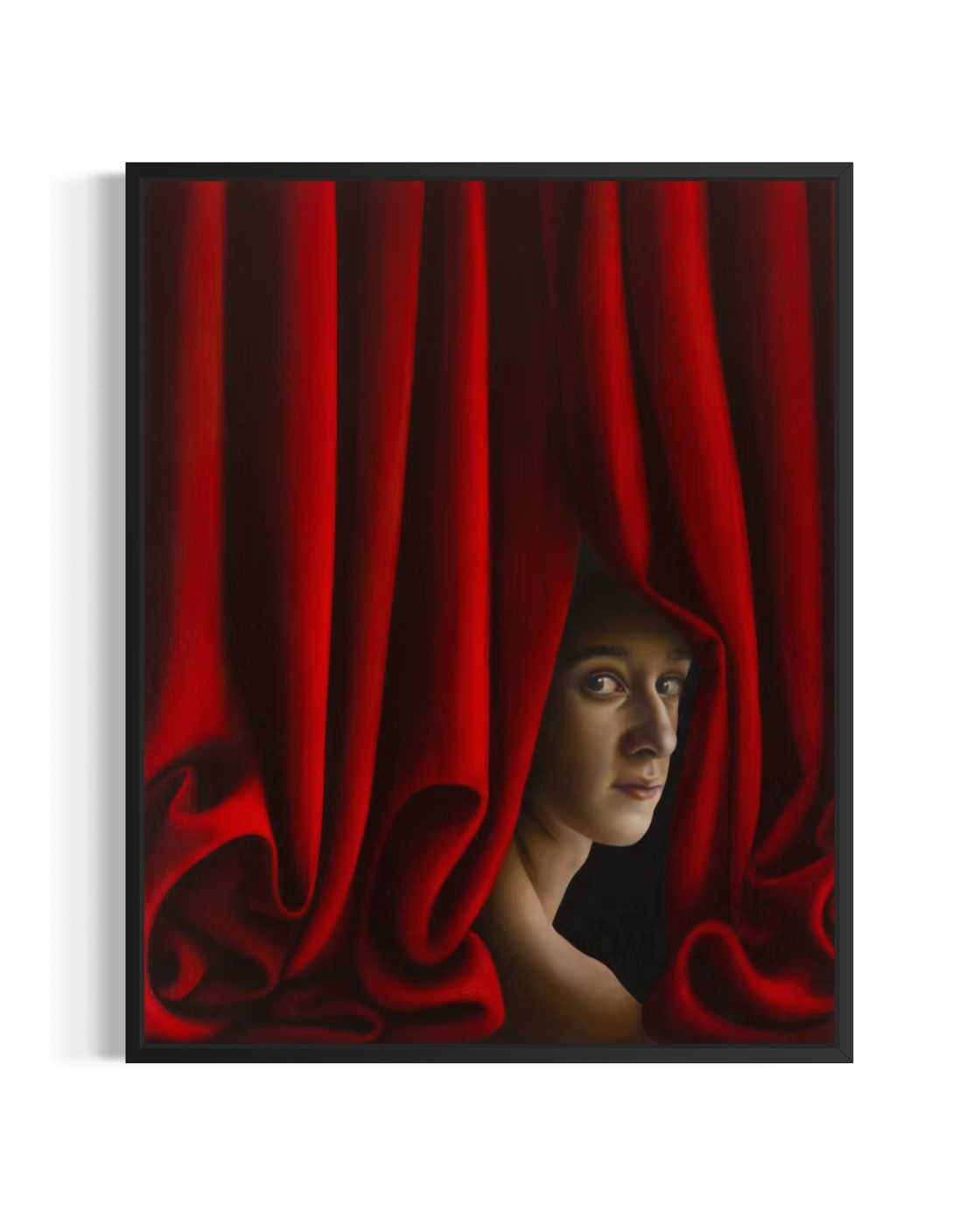
The Stories We Tell, oil on panel, by Pippa Young. See the work at Adorn The Common →
What did your years in hairdressing and beauty give you that you still use today?
I don't really see those 16 years as a detour, they shaped so much of what I do today.
I've always been creatively curious. As a child, I was constantly drawing, making things and experimenting with materials. I'd see something on television and try to recreate it, make garments, or build sculptures from things I found around me. That curiosity has always stayed with me.
Hairdressing allowed me to surround myself with incredibly creative people who had amazing skill and precision. But it also taught me about people. Every day I was surrounded by different personalities, stories and experiences. I realised that one of my strengths is connecting people, earning trust and making people feel welcome.
I've always wanted people to walk into a space I've created and feel comfortable, almost like they're entering my home. I want them to remember how the experience made them feel. The challenge is that constantly being that person, the host, the supporter, the person who looks after everyone else, can sometimes drain you.
I didn't always recognise that I needed time to replenish my own energy.
What was it like turning that same attention onto yourself through neurocoaching?
Since my sessions with James, I genuinely feel like a weight has been lifted. The problems haven't necessarily changed, and I still have challenges to deal with, but my response to them has changed.
Previously, I would spend so much time worrying and panicking about how I was going to solve something that the anxiety itself became the biggest obstacle. Often the solution was actually quite simple, but the stress prevented me from seeing it clearly.
Since working with James, I feel much more able to find clear routes and solutions without that panic. I feel calmer, more focused and more able to approach challenges logically.
What has shifted for you since the sessions?
I feel much more present and much less overwhelmed. I spent a lot of my career making sure everyone else had what they needed to succeed and feel supported. I was always saying yes, always committing and always following through.
The sessions helped me recognise that I also need to give myself that same care and attention. I still care deeply about Adorn and the people around me, but I've learned that carrying everything with urgency isn't the same as carrying it well.
What would you say to artists and founders building something community-led?
Building something community led can feel lonely, especially when you're doing a lot of it yourself. For me, the most important thing is staying connected to why you started.
Everything I do with Adorn comes from a genuine place of love and support for the talented, creative people I work with. Of course, it's a business and it has to make money, but I never want money to be the only motivation. I don't want the commercial aspect to dictate the creative decisions.
I want people to first experience the story, the artist and the emotion behind the work. If that connection leads someone to purchase something, then that's wonderful, but the starting point should always be authenticity.
Trust your values. Don't be afraid to let people see what you care about.
What's next for Adorn The Common?
Oh my word, I wish I knew!
I've been incredibly lucky this year to be invited into some amazing opportunities. I've curated for fantastic brands and helped source work for brilliant clients.
Looking ahead, I'd love to continue increasing visibility for queer artists, Black artists, female artists and neurodiverse artists, particularly by placing more of their work into public spaces.
Visibility is such an important part of creating change. It's about whose stories are seen, who gets recognised and who gets included in those conversations.
A year from now, I'd love to see more community focused galleries and creative spaces where diversity and inclusion are genuinely built into the foundations.
Of course, I'd also love to have my own gallery space again, so if anyone wants to invest in a new home for Adorn The Common, please get in touch!
Until then, we'll continue doing what we've always done: creating a platform where artists and collectors can discover each other and find beautiful, unique pieces of art and design created as heirlooms of creativity and storytelling.