Meet James: From Burnout to Freedom, and Guiding Others There
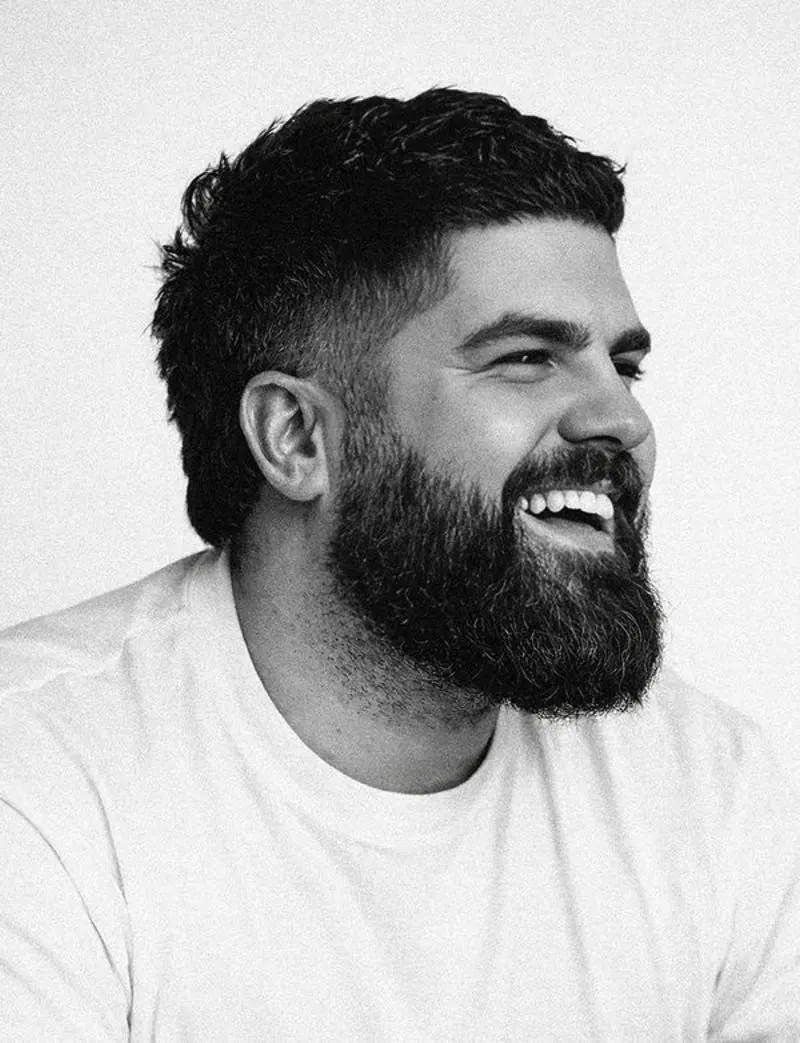
Photo: Arved
Some of my biggest breakthroughs haven't come from the work I do in sessions — they've come from the conversations afterwards. Walks with peers. Coffee with clients. Late-night messages with changemakers I admire. The method opens the door; the conversation is often where the shift actually lands.
Most of what we publish here is one of those conversations with someone else — a client, a peer, an unexpected voice. This one's different. These are the questions I get asked most often: who I am, where the work came from, and how I help people get free of what's holding them back. Same shape as always. Honest answers, no theatre.
— James
For people meeting you for the first time — who are you and what do you actually do?
I'm James Hazlett-Beard, founder of Expansion Works®.
I help founders, creatives, and changemakers get free of the past that's quietly holding them back — and build the life and work they actually want. Not manage it. Not cope with it. Get free of it, and feel the difference.
I know it's possible because I've walked it myself. I spent fifteen years building things in the creative industry — as a photographer, a producer, and finally running my own agency. I hit the wall that building things eventually builds in you, did the work to clear it, and came out the other side into a kind of freedom and alignment I didn't know was on the table. Everything good that's happened since came from that.
So I'm not a therapist and I'm not here to treat you. I'm a guide. I've travelled the road you're looking at, and I use everything fifteen years of leading people taught me to walk it alongside you. The work happens in three places: live group sessions, on-demand sessions you can return to in your own time, and 1:1 coaching for the deeper personal work. If you've already built something, already done plenty of work on yourself, and you've arrived at the part where willpower stops being the answer — that's exactly who I'm for.
That's where I come in.
You spent fifteen years in the creative industry. What were you actually doing?
Building, mostly. Failing a fair bit. And learning how to read people while I did it.
I started as a photographer — fashion, portraits, editorial. Then I moved into production, which is where I really learned the craft of holding things together: bigger sets, bigger budgets, more moving parts, and the kind of pressure that doesn't let up. adidas, Vogue, Anthony Joshua, Liam Gallagher, Raye. At points I was running teams of up to 150 people on a single production — and a set that size teaches you fast. You learn to read a room, spot the thing nobody's saying, find the one quiet tension that's about to derail the whole day. You learn it because if you don't, it costs you.
I made plenty of mistakes getting there. Pushed too hard, took on too much, mistook exhaustion for commitment more times than I'd like to admit. But every one of those mistakes sharpened something — an instinct for people and patterns that I now realise was the real training. I spent fifteen years sitting across from industry leaders, company heads, and serious creative talent, and the skill that actually mattered wasn't technical. It was being able to see what was really going on underneath what someone was telling me — and knowing how to move them through it.
That's the part people miss when they hear "neurocoach." This isn't theory I read in a book. It's fifteen years of guiding talented, driven, often stuck people toward what they were actually capable of — and then learning the method that finally made that change stick, in them and in me.
I'm not a neurocoach who decided to become a neurocoach. I'm someone who built things, led people, got plenty wrong, and found the work that set me free. Guiding others down that same road is the most natural thing I've ever done.
How did you first come across this kind of work?
I met Fabian Hirose in a pub. We got talking. I didn't know it at the time, but he was a management consultant for LVMH — and he turned out to be one of the most generous mentors I've ever had.
I was at a low ebb when we met, in a way I hadn't yet found language for. Fabian had been through his own version of it, and over the months that followed he became the person who pointed me at every door I eventually walked through.
I owe him more than I can put here. Fabian is a big part of the reason I'm who I am today.
But here's the honest bit, and it matters for anyone wondering whether this is for them: meeting Fabian wasn't enough on its own. What changed everything was that I was ready. Ready to actually look at the stuff I'd been avoiding. You can be handed every door in the world and still not walk through any of them. The difference was that I'd finally had enough of carrying it — and I was willing to face what was uncomfortable in order to be free of it.
That willingness is the real starting line. Not the method. Not the mentor. The decision to go.
You'd worked with coaches, read the books, done the work. Why did MAP land where the rest hadn't?
Because I'd genuinely tried it all, and each thing did its job.
Therapy gave me understanding — it helped me see what was happening and why. Coaching gave me structure and accountability — it kept me moving and honest. Both mattered. Both opened doors. But understanding a pattern and being free of it are two different things. I could explain my blocks beautifully and still walk straight into them.
What MAP gave me was the thing none of the others could: freedom. Peace. A sense of alignment where my inner world and my outer life finally pointed the same way. It didn't soothe the patterns or help me manage them — it cleared them, gently and completely. Blocks I didn't even know were there, memories I'd long forgotten that were quietly running the show. And the ones I cleared in those early sessions haven't come back.
That's the difference between management and transformation. Everything before had helped me cope. This actually changed who I got to be — and it's the same shift I now hold the door open for in you.
What does a session actually look like — for someone who's never done this?
It's calmer and more practical than people expect. No trance, no couch, no reliving the worst thing that ever happened to you. We're just two people on a call, working something out together.
We start by identifying what's actually going on — a feeling, a pattern, a belief, a goal that won't move. You don't need to know what's underneath it. Reading that is what fifteen years with people has made second nature to me.
Then we explore it. I ask questions; you answer in your own words. This is where my experience earns its place — knowing where to look, and which thread is the one actually worth pulling.
From there we set a direction and use MAP to do the work: clearing the limitation at the root and empowering something new in its place. You stay present throughout — relaxed, in conversation, often laughing. (The method works with your brain's natural reconsolidation window — a real neuroscientific mechanism that updates the charge at the source rather than just turning it down. That's why what we clear stays cleared.)
Then we turn it into movement — a plan of inspired action that's right for you, shaped by years of helping driven people get unstuck. Not a generic worksheet.
What you feel at the end: the thing that was loud is quieter, sometimes gone. Often the shift is subtle — what used to cause tension just feels natural, and you don't notice until you reach for the old reaction and find it isn't there. We leave time between sessions so it integrates. That feeling — lighter, freer, moving with purpose — is the whole point.
You're a neurocoach — but how do you actually help someone get free?
Here's the thing about being stuck: we each live inside our own perception — our own fishbowl, our own experience, our own invisible cage. From the inside, the bars don't look like bars. They look like the way things are. That's the hardest part to do alone, and it's exactly where I come in: helping you see the cage, and then helping you out of it.
And I can do that because I've been in it. I was the overthinker. The self-saboteur. The self-critic for whom nothing was ever enough. I know that particular prison from the inside — which is why I'm not guiding you toward freedom in theory. I'm guiding you somewhere I've already walked, from exactly where you're standing now.
The other thing I bring is a genuine love for who you are — quirks and all. Fifteen years on sets taught me that. I worked with the most beautifully mixed rooms you can imagine: every background, every culture, every kind of mind, neurodivergent and otherwise, all the different stories people carried in with them. I loved it. Watching those people do their best work, seeing them win, still makes my soul sing — it's the thing that fires me up more than anything.
And here's what I learned from all of it: the very thing someone thinks is their barrier is usually their superpower. The way your mind works that you've been told is "too much," the sensitivity, the intensity, the wiring that doesn't fit the mould — that's not the problem. Cleared of the weight it's been carrying, it's the exact thing that sets you apart.
That's also why I don't flinch at the hard moments. In the work, the biggest points of tension are where the most profound shifts happen. When something feels like it's bristling, resisting, too much to look at — that's usually the doorway. I'll be right there with you when we walk through it.
Will one session change everything?
You won't clear a lifetime in a single hour — and I'd be wary of anyone who promised you would. But you'd be surprised how much shifts in one, and how quickly things start to move once the first block goes.
It depends on what you're after, which is exactly why the work happens in two ways.
Groups are where you clear resistance and build momentum. They're brilliant for shifting the everyday friction — the procrastination, the second-guessing, the low-grade noise slowing you down. A room of people doing the work alongside you lifts more than you'd expect. If you want to feel clearer and get moving, that's often all you need.
1:1 is where the deep transformation happens. The deep-seated limiting beliefs, the old barriers, the patterns with roots — those get cleared one to one, at your pace. This is the work that changes the ground you stand on, not just the weather. It's where people rebuild the relationship with themselves and step into a genuinely different life.
Most people use both — groups to keep moving, 1:1 when something deeper is ready to shift. You don't have to decide now. I'll help you find what you actually need.
As a consultant and neurocoach, what transformation can people expect?
It's coaching — but coaching with the power to unburden what's underneath. That's the part most approaches can't reach, and it's where the real transformation lives.
I'm not here to sell you a technique or win a debate about modalities. People come to me having tried all sorts — therapy, coaching, NLP, hypnosis, IFS, breathwork, the lot. Each one tends to do something: help you understand what you're carrying, or manage it, or live more comfortably alongside it. What I do is different. As a consultant and neurocoach, I take you to the root of it and we clear it — gently, completely — so it stops running the show.
My job is to be your guide through that. To navigate the complex inner world with you, point to what you can't quite see yet, and clear what's in the way — so your vision and your life finally point the same direction. That's the transformation people can expect: not just feeling better, but lasting alignment, and the freedom to build what they're actually here to build.
The one honest boundary: this isn't a replacement for medical or psychiatric care. If something needs a clinical setting, that's where it belongs — and where it makes sense, I'll happily work alongside that, with your medical professional's knowledge and consent. Being straight about fit is part of my job, not a sales decision. If the work isn't right for you, I'll tell you, and point you toward what is.
You launched an agency after you'd done the work. What changed once you stopped fighting your own resistance?
Pretty much everything — and honestly, this is the part I most want you to hear, because it's the clearest proof I have of what's possible on the other side of this work.
By the time I launched my agency, I'd cleared the limiting beliefs, the glass ceilings, the inherited patterns about what running a business had to cost a person. I was in flow. I could suddenly see opportunities I'd been blind to. So I built it differently from the start.
Now this'll make you laugh. I used to keep moodboards — vision stuff, the work I wanted to make, the people I wanted to make it with. Looking back, it's almost uncanny how much of it came true. One of those boards had Lisa Rinna pinned to it for Marc Jacobs. Not long after, I shot Lisa Rinna for the cover of POP. You pin the vision, clear what's in the way of it, and then you watch it walk through the door. That's not magic — it's what happens when nothing inside you is fighting it anymore.
We made work with Prada, Google, Maison Margiela, and a long list of people I'm proud to have worked with. I had the privilege of managing Jon Emmony — someone I admire enormously and so thankful to have in my life. The agency turned over seven figures, which, given where I started, I still find quietly ridiculous. But what is cool, if a small town boy can do it, so can you. Anything really is possible.
But the thing I'm proudest of isn't the names or the client list. Production is notoriously brutal — overworked, underpaid, burnt out as standard. Mine wasn't. The team I built was paid fairly, supported, allowed to be people. That's rare in this industry, and I'm prouder of it than any client we won.
That's what alignment actually buys you. Not just success — success that doesn't cost you yourself. The mission has never changed: create space to empower. Back then I was creating it for clients and teams. Now I do it for changemakers, creatives, and founders directly. Same mission. Different focus.
You lost your brother in 2025. How did the work hold you through that?
Nothing was ever going to take the loss away.
I leaned on everything. Grief counselling and therapy were essential — they helped me understand what was happening inside me and gave the chaos some language.
What this work did was different. It had already built my resilience — the capacity to feel everything that needed feeling without being submerged by it. To grieve fully without losing the rest of my life in the process. The freedom I'd built over years was the ground I was standing on when everything else gave way. It held.
Losing him also clarified the mission. I'd known for a long time it was about creating space to empower. What I hadn't known was specifically who. Watching what he carried — what we all carry, what so much of it could be free of with the right support — made it obvious. The people who want to go out and create change. The ones quietly carrying more than anyone sees.
Grief isn't something to clear. It's something to be present for. The counsellors helped me understand it. This work gave me the strength to stay standing inside it.
What's the one thing you'd say to someone who's read this far but hasn't reached out?
You probably already know.
Whatever you've been carrying — the thing you keep meaning to look at, the pattern you've named to yourself a hundred times, the feeling that keeps coming back no matter how well you understand it — you already know what it is.
You don't need to know how to fix it. That's the part you can hand to me, to the method, to the time we'd spend together. What you bring is the one thing nobody can bring for you: the willingness to look at it. To be ready to face what's uncomfortable so you can finally be free of it — and step into the life that's been waiting on the other side.
If you're not ready, that's a complete and honest answer. But if you're closer to ready than you've been in a while — that's usually the sign. I'd love to guide you the rest of the way.
— James